
One-day style floors that stand up to sun
Polyaspartic Floor Coatings in Miami, FL
A coating that cures fast, stays clear in strong sun and gets your garage or terrace back in a day or two.
- Free estimates done in person, with the floor measured on site
- Every slab moisture-tested before the first coat
- Written quotes that spell out prep, coats and total
Polyaspartic for Sun, Heat and Short Timelines
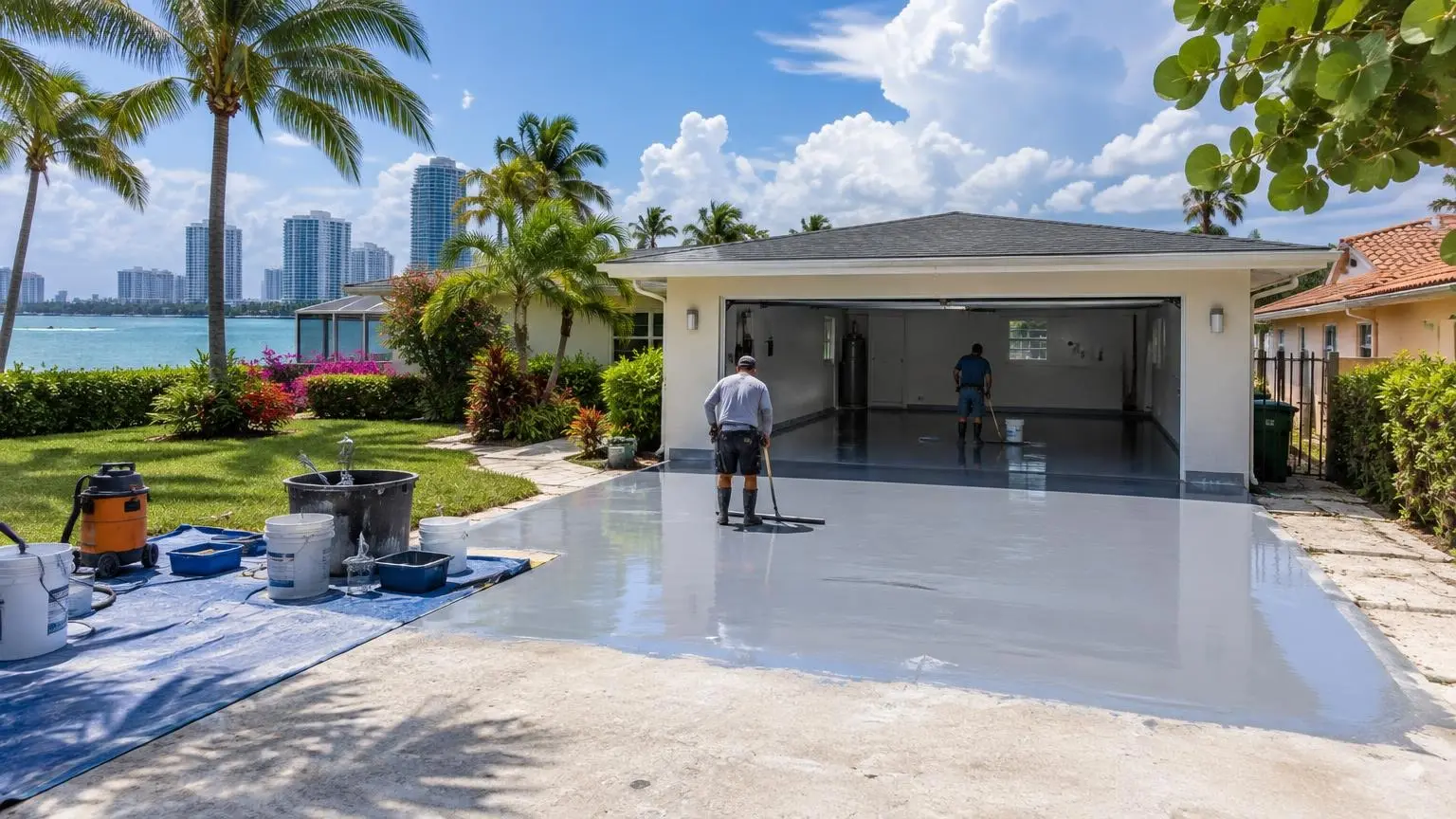
Polyaspartic floor coatings are often the right fit in Miami because they address the two biggest complaints about plain epoxy: it yellows in sunlight and it is slow to cure. Chemically, polyaspartic is a kind of polyurea. HomeGuide rates its UV resistance excellent, where standard epoxy gets only poor to fair, and puts full cure at about 1 to 2 days versus as long as a week for epoxy. On a garage with afternoon sun pouring in or a terrace in full light, those two points outweigh almost everything else.
Where polyaspartic makes the most sense
- Sunny garages. When the door is often open and light reaches the slab, polyaspartic, either as the topcoat or as the whole system, keeps the color true.
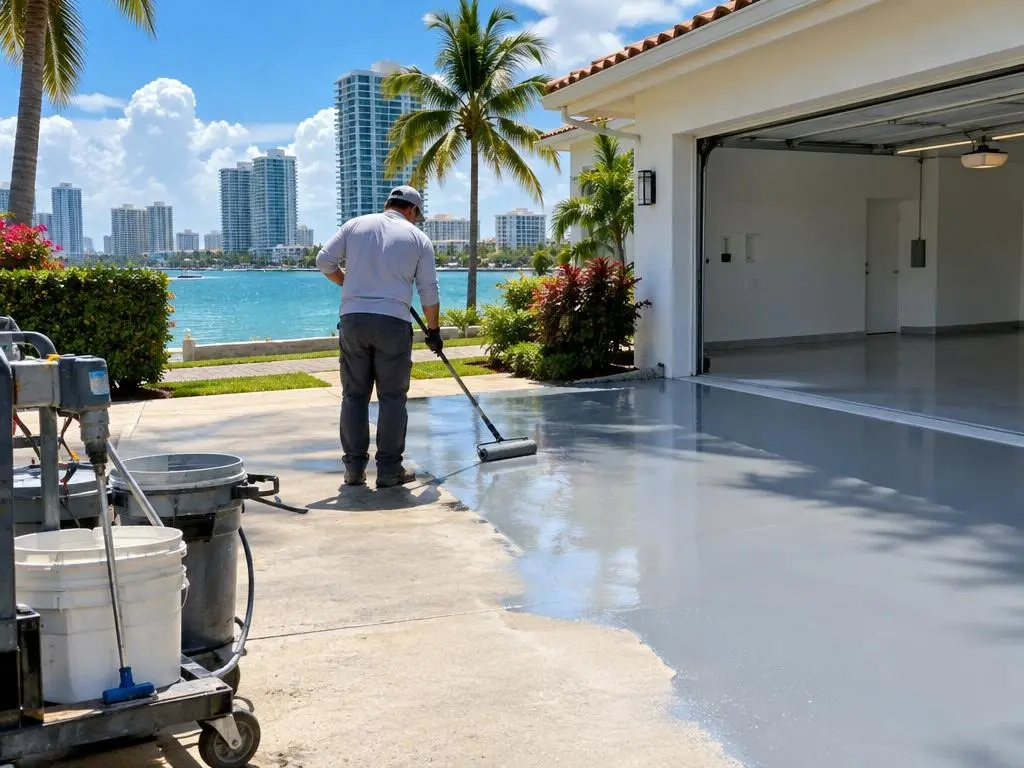
- Outdoor concrete. Patios, terraces, walkways and pool decks are in direct sun all day and need a UV-stable product.
- Tight schedules. Families who cannot leave a car outside for a week, and businesses that cannot close for long, benefit from the faster return to service.
- Hot tire concerns. The hard finish resists the softening and lift that thin coatings can suffer under hot tires.
Polyaspartic over epoxy, or polyaspartic alone
It is usually applied one of two ways. The first puts it on top of an epoxy base. Epoxy builds thickness well: HomeGuide lists 10 to 20 mils per coat for epoxy, while polyaspartic goes on at 2 to 6 mils per coat. Pairing them gives you build from the epoxy underneath and UV and wear resistance from the polyaspartic above. The second is polyaspartic from base to top. That route is faster and fully UV stable, which suits outdoor slabs and jobs where downtime must be short. We pick between them after seeing the floor and hearing how you use it.
Why fast cure needs more care, not less
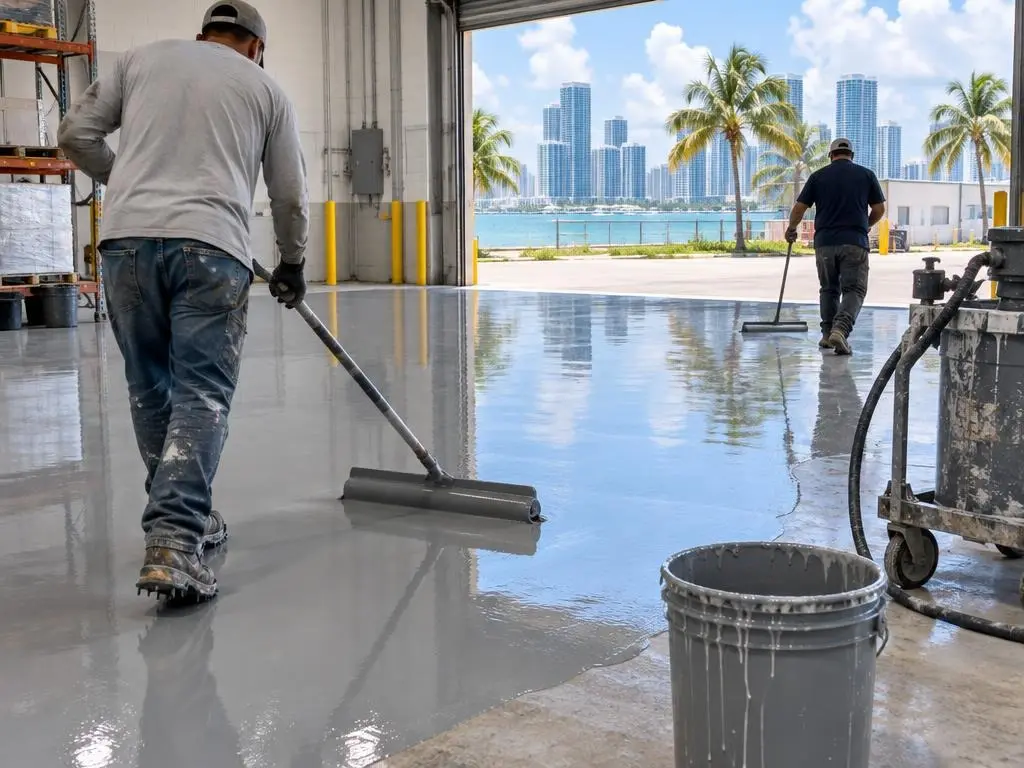
Polyaspartic sets quickly, which is what makes a one- or two-day job possible. It also means the crew has a short working window for each batch, and the conditions have to be right when it goes down. In Miami's humid months, the slab can sit close to the dew point, especially in the morning or after a storm. We take readings before mixing each batch and we work in sections sized to the product's pot life. Fast-setting coatings applied by rushed crews are where bubbles, roller marks and weak bonds come from.
Moisture and prep
A fast-cure coating still needs a sound, open surface to bond to. We diamond grind, fill cracks and joints, and test for moisture before anything is mixed. Miami's porous limestone base and shallow water table mean many slabs carry some moisture. When the test finds moisture, a damp-tolerant primer goes down beneath the polyaspartic layers.
How it looks
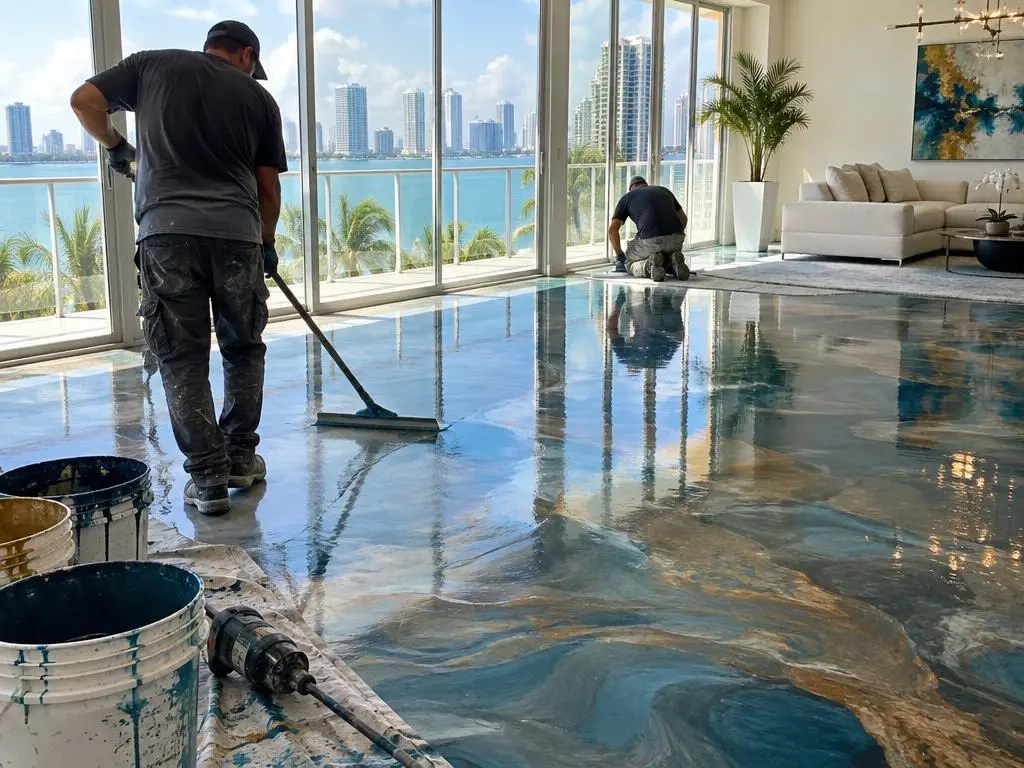
Polyaspartic can be clear, tinted to a solid color, or used over a flake broadcast. It can be glossy or satin, and a fine grit can be mixed into the last coat for grip. On terraces and pool decks, lighter colors are generally kinder to bare feet in the midday heat.
Polyaspartic versus polyurea and epoxy
You may see polyurea, polyaspartic and epoxy quoted side by side. HomeGuide's garage floor coating guide lists epoxy at $4 to $10 per square foot, polyurea at $5 to $10 and polyaspartic at $5 to $12. Polyaspartic is a form of polyurea that has been modified to give installers a little more working time, which helps produce a smoother finish. The price gap over epoxy usually reflects the material cost and the faster, more demanding install. For a floor that sees sun or has to return to service quickly, many homeowners decide the difference is worth it.
Care and recoating
A polyaspartic floor cleans like any coated floor: sweep or blow out grit, damp-mop with a pH-neutral cleaner in warm water, and wipe up chemicals soon after a spill. Because it is UV stable, it holds its color in sunny spots that would turn plain epoxy amber. When the top layer eventually dulls in heavy traffic lanes, it can usually be lightly sanded and recoated without grinding the whole system off. We explain what that looks like during the estimate.
What we need from you on install day
The space should be emptied, including shelves along the walls if the coating is going up the stem walls. Cars go elsewhere until we give the all-clear. Pets should be kept away from the work area, and we ask that sprinklers near an open garage or outdoor area be switched off until the coating has cured. On a summer job, an afternoon storm can still change the plan. If rain or humidity moves the readings out of range, we pause the next coat and tell you the new timing rather than pushing ahead.
Polyaspartic Systems We Install
Each system is matched to the floor, the sun exposure and how fast you need the space back.
Polyaspartic topcoat over epoxy
A thick epoxy base for build, sealed with a UV-stable polyaspartic clear coat.
Full polyaspartic system
Polyaspartic for both base and topcoat, giving the quickest return to service and full UV stability.
Polyaspartic flake floor
Vinyl chips broadcast into a polyaspartic base and sealed under a polyaspartic clear coat.
Outdoor polyaspartic
UV-stable coatings with texture for patios, terraces and walkways.
Recoat of an existing floor
A sound older coating scuffed and topcoated in polyaspartic to restore color and gloss.
Published Polyaspartic Coating Costs
| Job | Typical range | Source |
|---|---|---|
| Polyaspartic, per sq ft | $5 to $12 | HomeGuide |
| One-car garage | $1,400 to $4,700 | HomeGuide |
| Two-car garage | $2,000 to $6,900 | HomeGuide |
| Three-car garage | $2,900 to $10,400 | HomeGuide |
| 300 sq ft floor | $1,500 to $3,600 | HomeGuide |
| 500 sq ft floor | $2,500 to $6,000 | HomeGuide |
| Typical project | $1,440 to $3,240 | Bob Vila |
National ranges from published cost guides. Your floor's size, prep needs and finish set the real number, and that number is what goes on your written estimate.
How a Polyaspartic Job Runs
1. Assess and test
A site visit with measurements, a slab moisture test and a look at sun exposure.
2. Quote the system
You get a written quote naming base, color or flake, topcoat and total.
3. Prep
Diamond grinding, crack repair and cleaning, usually on day one.
4. Coat in sections
Each batch is mixed after a humidity and slab temperature check and applied within its working time.
5. Return to service
We give you foot traffic and vehicle times for your product and that day's conditions.
Why Choose Us for Polyaspartic Floor Coatings
UV stability where it counts
We use polyaspartic anywhere daylight reaches the floor.
Batches sized to the conditions
We mix only what can be applied well in the working time, given the heat that day.
Straight talk on epoxy versus polyaspartic
If epoxy is the better fit for an indoor floor, we say so.
Polyaspartic Floor Coatings Questions
Is polyaspartic better than epoxy?
For sun-exposed and outdoor floors, usually yes. HomeGuide gives polyaspartic an excellent UV resistance rating and epoxy a poor to fair one, and polyaspartic cures in about 1 to 2 days. Epoxy builds more thickness per coat, so many systems put epoxy down first and finish with polyaspartic.
How quickly is a polyaspartic garage floor ready for my car?
HomeGuide puts heavy vehicle traffic at about 24 to 48 hours after application, and Bob Vila lists walking after 3 to 4 hours and vehicles after 24 hours. The exact time depends on the product and the temperature and humidity that day, and we give you the times before we leave.
Can polyaspartic be done as a DIY project?
Bob Vila's guide says polyaspartic is not a DIY product. It sets fast, so it must be mixed and spread within a short window, and errors are tough to correct after it cures. Proper grinding also calls for equipment most homeowners do not own.
What lifespan can I expect from a polyaspartic floor?
HomeGuide gives polyaspartic a lifespan of 10 to 20 years or more. Where a given floor lands in that range depends mostly on the prep beneath it and the wear it sees.
Does polyaspartic work on a pool deck?
It can, with texture added for wet feet and a lighter color to limit heat. Pool decks also need careful prep around drains and coping. See our Terrace & Pool Deck Coatings page for the outdoor options.
Polyaspartic Floor Coatings Service Areas
- Epoxy Flooring in Miami, FL
- Epoxy Flooring in Miami Beach, FL
- Epoxy Flooring in Coral Gables, FL
- Epoxy Flooring in Doral, FL
- Epoxy Flooring in Hialeah, FL
- Epoxy Flooring in Miami Lakes, FL
- Epoxy Flooring in Miami Gardens, FL
- Epoxy Flooring in North Miami, FL
- Epoxy Flooring in North Miami Beach, FL
- Epoxy Flooring in Aventura, FL
- Epoxy Flooring in Sunny Isles Beach, FL
- Epoxy Flooring in Key Biscayne, FL
- Epoxy Flooring in South Miami, FL
- Epoxy Flooring in Westchester, FL
- Epoxy Flooring in Sweetwater, FL
- Epoxy Flooring in Fontainebleau, FL
- Epoxy Flooring in Miami Springs, FL
- Epoxy Flooring in Hialeah Gardens, FL
- Epoxy Flooring in Bal Harbour, FL
- Epoxy Flooring in Surfside, FL
- Epoxy Flooring in Coconut Grove, FL
- Epoxy Flooring in Brickell, FL
- Epoxy Flooring in Kendale Lakes, FL
- Epoxy Flooring in Tamiami, FL
- Epoxy Flooring in Miami Shores, FL
Get a Polyaspartic Floor Coatings Estimate
Find out if a fast-cure polyaspartic floor fits your space. Call (786) 321-8267.