
Warehouses, shops, kitchens and retail
Commercial & Warehouse Epoxy in Miami, FL
Industrial resin floors scheduled around your operating hours, from Doral distribution space to downtown storefronts.
- Free estimates done in person, with the floor measured on site
- Every slab moisture-tested before the first coat
- Written quotes that spell out prep, coats and total
Floors for Miami's Working Spaces
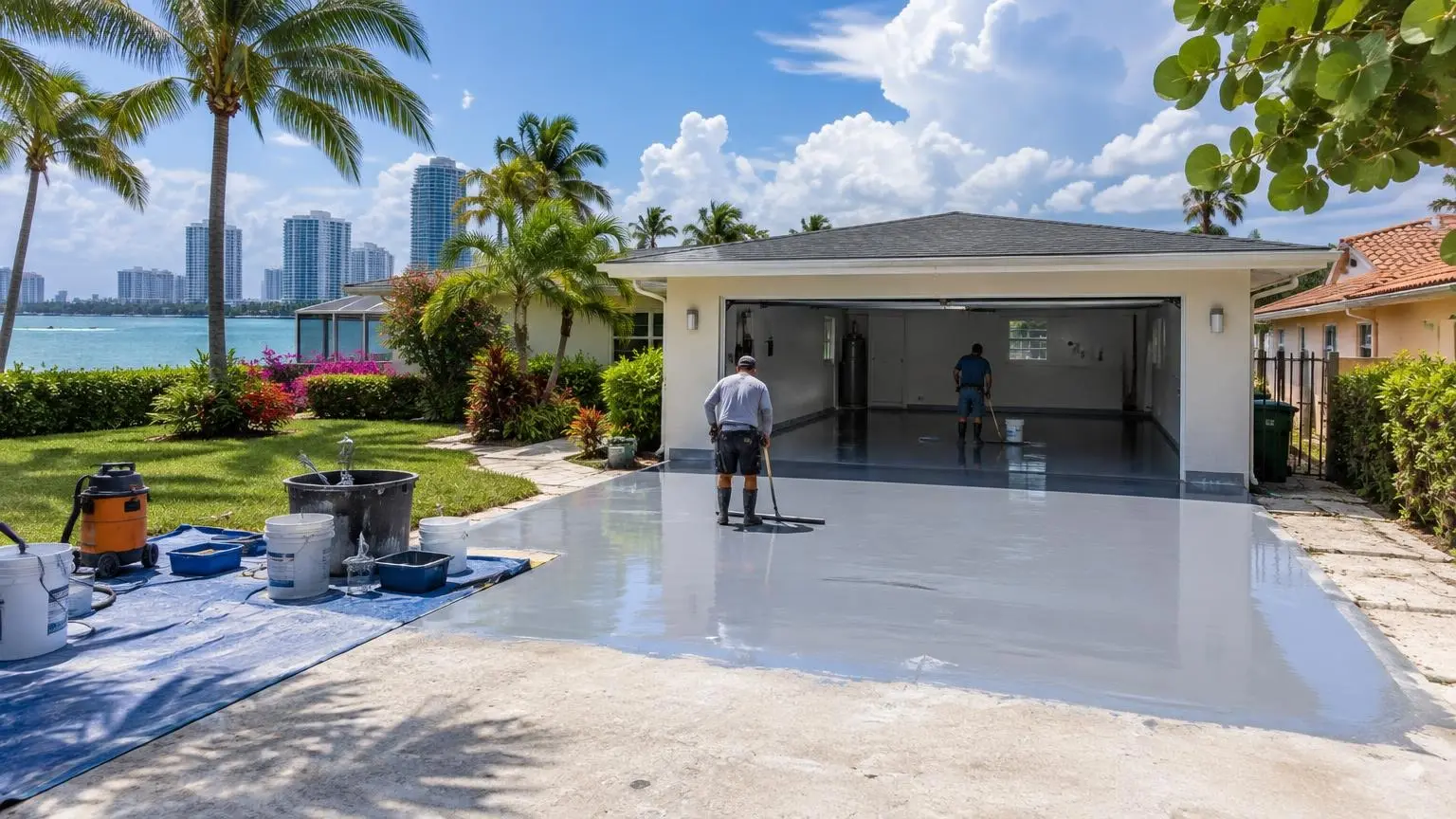
Commercial & Warehouse Epoxy is how we describe the work we do on floors that carry forklifts, pallet jacks, foot traffic, food spills and chemicals. Miami-Dade has a large stock of this kind of space. Doral alone, about 5 miles west of Miami International Airport, is home to many importers and exporters, and a 2017 city study counted 6,802 establishments employing 102,235 workers there. Warehouses, flex units, auto shops, restaurant kitchens, clinics and retail floors all need a concrete floor coating that matches what happens on them.
What commercial epoxy flooring has to handle
The demands differ by use, and the system changes with them.
- Warehouses and distribution. Forklift and pallet jack wheels, dropped loads and constant traffic call for thick 100% solids epoxy and a hard topcoat.
- Auto and fleet shops. Oil, brake fluid, coolant and solvents need chemical resistance and an easy-clean surface.
- Commercial kitchens and food prep. Hot water, grease and daily washdown need texture and coves at the walls.
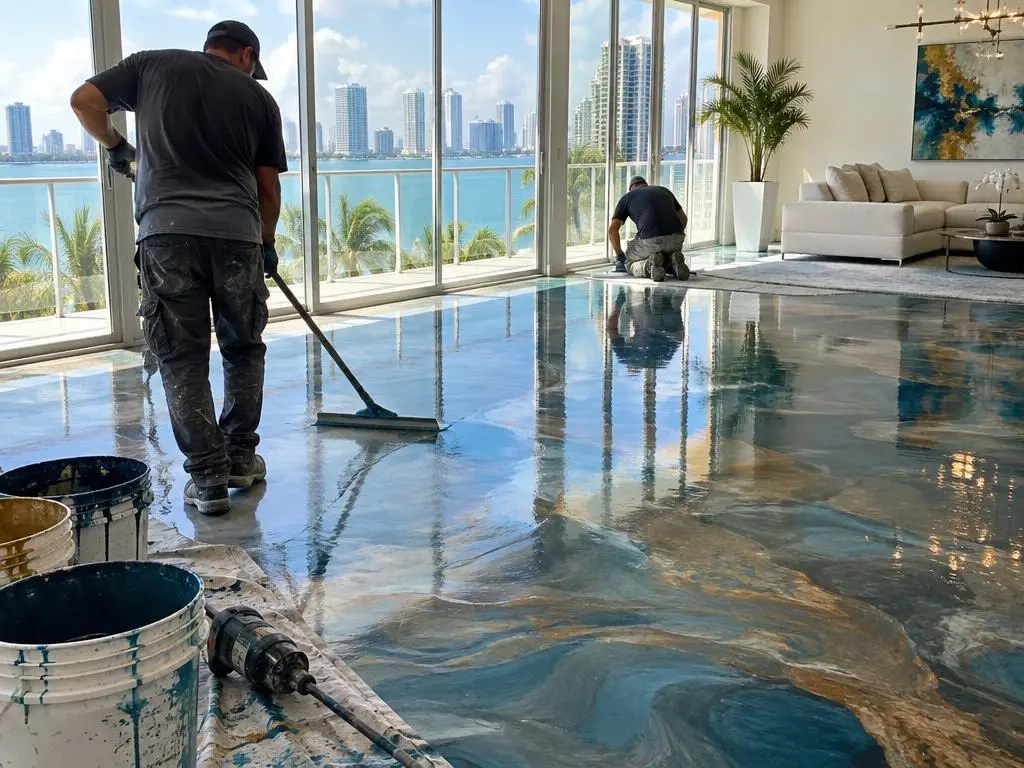
- Retail and display floors. Appearance matters, so flake, solid color or metallic finishes over a durable base are common.
- Clinics, gyms and offices. Seamless, cleanable surfaces with chosen color and gloss.
Industrial coatings and thickness
Per HomeAdvisor, 100% solids systems for commercial and industrial floors start around $12 per square foot, well above residential pricing, because they go on thicker and use tougher materials. Thickness is built in coats. HomeGuide lists epoxy at 10 to 20 mils per coat, so a heavy-duty floor may get several build coats before the topcoat. On industrial floors, we also look at joints. Saw-cut control joints in a warehouse slab take a beating from hard wheels, and we fill or armor them so edges do not chip out.
Moisture in South Florida slabs
Ground-floor commercial slabs in Miami sit over porous limestone with water close to the surface. If a slab has no working vapor barrier under it, moisture can move up through the concrete, and a floor coating can trap it. We test before we quote. Where the readings show vapor, we specify a moisture-mitigating primer, which adds cost but protects the rest of the system.
Working around your hours
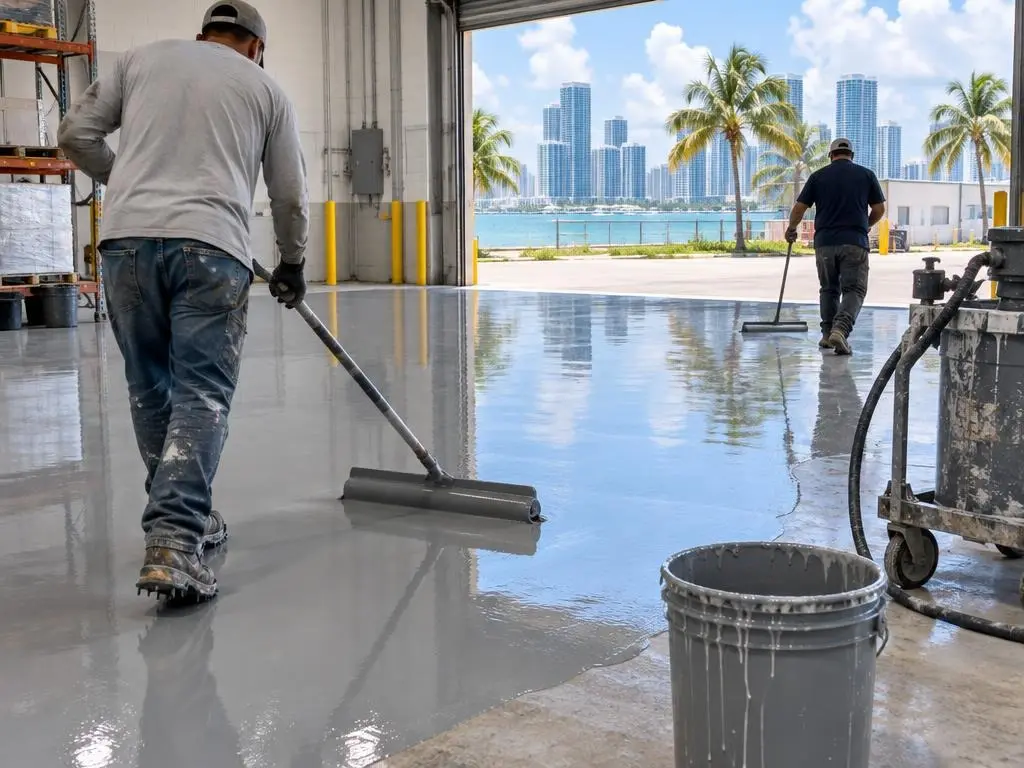
Shutting down for a week is not an option for most businesses, so we phase the job: one bay or section at a time, at night or on weekends if needed, with traffic routed around the area being coated. Faster-curing polyaspartic topcoats can shorten downtime, and Bob Vila's guide notes that with this approach a business may only need to shut for a day or two. The phasing plan is written into the quote.
Safety markings and texture
Warehouse and shop floors often need line striping for aisles, pedestrian walkways and forklift zones, and anti-slip texture near doors, docks and wash areas. Those details are cheaper to add during the install than later, so we cover them at the estimate.
Older buildings and recertification
Miami-Dade requires older buildings to be recertified, and Doral applies the county rule that buildings recertify at 30 years old and every 10 years after. A coating is not a structural repair. If we see slab damage that looks structural, we stop and tell you, so it can go to the right professional before any floor goes down.
Choosing between a coating, a sealer and resurfacing
Not every commercial floor needs a full resin system. A dusty storage room with light foot traffic may only need a penetrating sealer. A worn slab with scaling and pitting may need resurfacing, which HomeGuide lists at $3 to $7 per square foot, before any coating can go on. A distribution floor with forklifts needs a thick, multi-coat industrial system. We look at the traffic, the chemicals and the budget, and we tell you where a simpler option is enough.
Cleaning and maintenance for business floors
A resin floor only stays safe and good-looking if it is cleaned the right way. We recommend neutral cleaners and auto-scrubber pads matched to the finish, and we can talk your cleaning crew through what to use and what to avoid. Harsh acid or solvent cleaners can dull or soften some topcoats. Busy aisles and dock doors wear first, so we plan for periodic recoating of those lanes rather than waiting for the whole floor to fail.
Information that helps us quote
Send us the approximate square footage, the type of traffic (foot, carts, pallet jacks, forklifts), any chemicals or food products on the floor, your operating hours, and photos of the worst areas. If the building has a landlord or a property manager, let us know who needs to approve the work. With that, we can plan a site walk that covers everything in one visit. For multi-tenant buildings and flex units, it also helps to know whether neighboring units will stay open during the work, since grinding noise and ventilation have to be planned around them.
Commercial Floor Systems
Each commercial floor is specified for its traffic, chemicals and cleaning routine.
Warehouse and distribution floors
Thick 100% solids epoxy with a hard topcoat for wheels and loads.
Shop and garage bays
Chemical-resistant systems for oil, coolant and solvents.
Kitchen and wet areas
Textured, washable floors with coves at the walls.
Retail and display finishes
Flake, solid color or metallic over a durable commercial base.
Joint filling and repair
Control joints and spalled edges filled before coating.
Line striping and safety zones
Aisles, walkways and forklift lanes marked in the coating.
Published Commercial Coating Costs
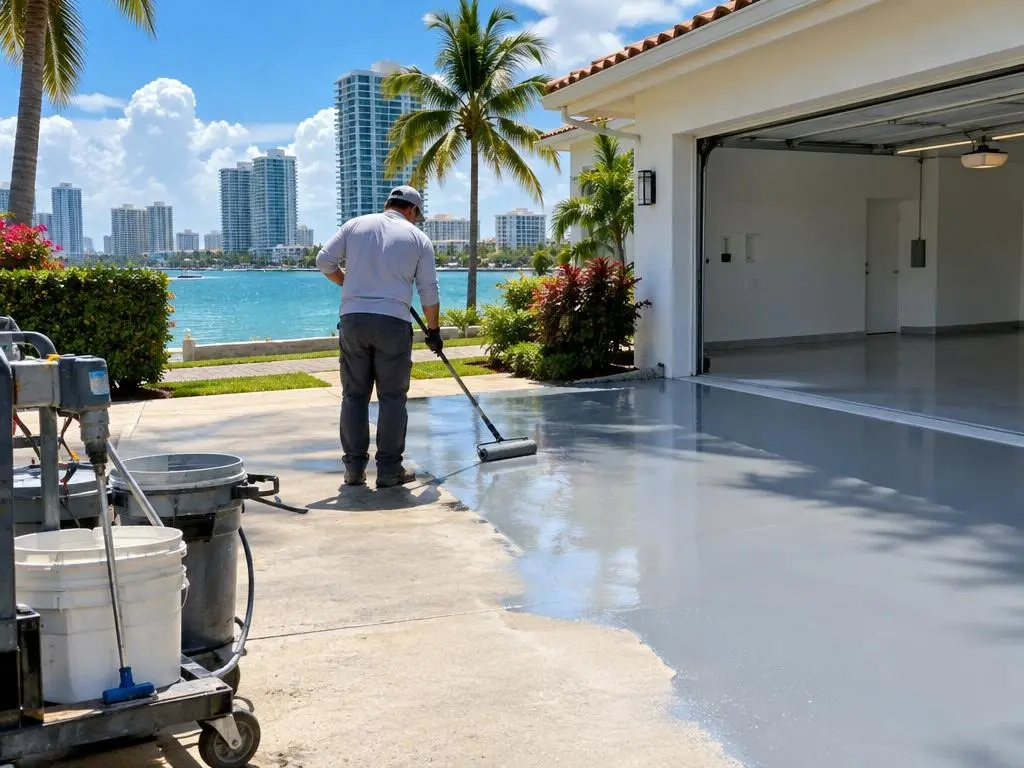
| Item | Typical range | Source |
|---|---|---|
| Commercial or industrial 100% solids | $12+ per sq ft | HomeAdvisor |
| Professional epoxy floor, per sq ft | $3 to $12 | This Old House |
| Polyaspartic coating, per sq ft | $5 to $12 | HomeGuide |
| Concrete resurfacing, per sq ft | $3 to $7 | HomeGuide |
| Patching cracks and chips | $25 to $250 | HomeAdvisor |
Commercial pricing swings with square footage, slab condition, moisture mitigation, chemical exposure and phasing. These national ranges are a starting point only, and the written proposal we give you is the price.
How a Commercial Job Runs
1. Site walk
We look at the slab, the traffic, the chemicals and your schedule, and test for moisture.
2. Written proposal
System, thickness, prep, phasing and total, all on paper.
3. Prep
Surface prep by grinding or shot blasting, plus joint and crack repair and cleaning.
4. Coat in phases
Primer, build coats and topcoat, section by section around your hours.
5. Striping and handover
Lines and safety zones added, and return-to-service times given.
Why Choose Us for Commercial & Warehouse Epoxy
Phased schedules
We work around shifts, deliveries and opening hours.
System matched to use
A kitchen, a forklift aisle and a retail floor each get a different build.
Moisture tested before pricing
Vapor mitigation is in the quote from the start, not added later.
Clear flags on slab damage
If something looks structural, we say so before coating.
Commercial & Warehouse Epoxy Questions
What should a business budget for commercial epoxy flooring?
According to HomeAdvisor, 100% solids systems for commercial and industrial use start at about $12 per square foot. Large open warehouses can fall differently than small rooms with lots of edges, and moisture mitigation adds cost. We quote after a site walk.
Can you coat our floor without shutting down?
In most cases, yes: we split the work into sections and schedule it for nights or weekends. Faster-curing polyaspartic topcoats can cut downtime to a day or two per section. The plan is written into the proposal.
Is epoxy right for a restaurant kitchen?
A textured, chemical-resistant resin system with coves at the walls works well in many kitchens. Hot water washdown and grease need the right product, so we look at your cleaning routine and drains before recommending one.
What is the difference between a concrete sealer and a floor coating?
A sealer soaks into the concrete or leaves a thin film, and mainly reduces dusting and staining. A coating builds a bonded layer on top, measured in mils, which protects against wear, chemicals and impact. Warehouses and shops usually need a coating.
Do you stripe warehouse floors?
Yes. Aisle lines, pedestrian walkways and forklift zones can be applied as part of the coating job. Planning them during the estimate keeps the layout right.
Commercial & Warehouse Epoxy Service Areas
- Epoxy Flooring in Miami, FL
- Epoxy Flooring in Miami Beach, FL
- Epoxy Flooring in Coral Gables, FL
- Epoxy Flooring in Doral, FL
- Epoxy Flooring in Hialeah, FL
- Epoxy Flooring in Miami Lakes, FL
- Epoxy Flooring in Miami Gardens, FL
- Epoxy Flooring in North Miami, FL
- Epoxy Flooring in North Miami Beach, FL
- Epoxy Flooring in Aventura, FL
- Epoxy Flooring in Sunny Isles Beach, FL
- Epoxy Flooring in Key Biscayne, FL
- Epoxy Flooring in South Miami, FL
- Epoxy Flooring in Westchester, FL
- Epoxy Flooring in Sweetwater, FL
- Epoxy Flooring in Fontainebleau, FL
- Epoxy Flooring in Miami Springs, FL
- Epoxy Flooring in Hialeah Gardens, FL
- Epoxy Flooring in Bal Harbour, FL
- Epoxy Flooring in Surfside, FL
- Epoxy Flooring in Coconut Grove, FL
- Epoxy Flooring in Brickell, FL
- Epoxy Flooring in Kendale Lakes, FL
- Epoxy Flooring in Tamiami, FL
- Epoxy Flooring in Miami Shores, FL
Get a Commercial & Warehouse Epoxy Estimate
Book a site walk for your warehouse, shop or storefront. Call (786) 321-8267.